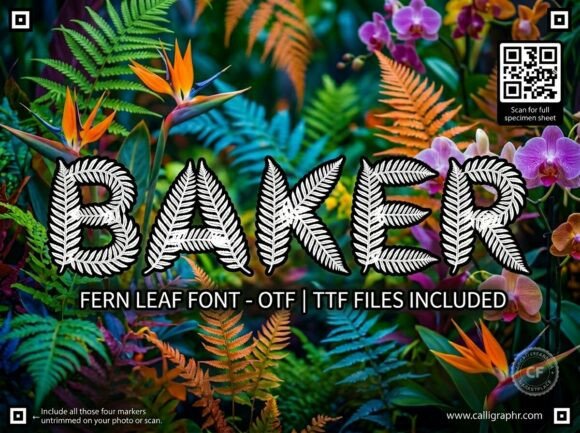
Baker: The Avant-Garde Display Font for Commanding Designs
There's a moment in every creative project where you need a visual element that doesn't just fit—it dominates. It's that headline that makes someone stop scrolling, the logo that burns into memory, or the packaging that leaps off a crowded shelf. For those moments, you need more than a font; you need a typographic event. Baker is precisely that: an avant-garde, all-caps display typeface engineered to be the undisputed focal point of any composition. This isn't background text; it's the main character, crafted for creators who refuse to blend in.
A Typeface with Commanding Personality and Polished Finish
What immediately sets Baker apart is its powerful visual personality. Each uppercase letter is treated as a standalone work of art, featuring unique artistic flourishes and a strong, confident stroke. Yet, for all its expressive energy, it maintains a high-end, polished finish. This duality is its superpower. It feels equally at home in the refined world of luxury branding—think embossed details on high-end cosmetics or the sleek typography on a premium spirits bottle—as it does in the raw, experimental layouts of an avant-garde art magazine or a music festival poster. This versatility makes it a potent tool for designers and entrepreneurs across vastly different industries.
Strategic Applications: Where Baker Truly Shines
Understanding a font's personality is one thing; knowing where to deploy it is what drives real-world results. Baker's all-caps, display-oriented nature means it's built for impact, not for body copy. Here’s how you can strategically apply it across your projects:
- Logo Design & Brand Identity: A logo sets the entire tone for a brand. Baker can serve as the cornerstone of a bold, modern brand identity for creative agencies, boutique hotels, artisanal product lines, or contemporary artists. Its unique character ensures immediate recognition.
- High-Impact Headlines & Hero Sections: On a website landing page or in a print advertisement, the main headline does the heavy lifting. Using Baker here guarantees your message is seen and felt, creating a strong first impression that boosts engagement.
- Packaging & Label Design: In a retail environment or an online store, packaging is your silent salesperson. Baker's artistic flair can make a product feel premium, conceptual, and desirable, helping it stand out on a digital shelf or a physical one.
- Social Media Graphics & Digital Content: For Instagram stories, YouTube thumbnails, or promotional banners, stopping the scroll is everything. Baker's commanding presence can increase click-through rates and make your content more shareable.
- Poster & Event Design: From music gigs and art exhibitions to corporate conferences, an event poster needs to generate excitement. Baker's energy is perfect for creating promotional materials that feel dynamic and essential.
- Editorial & Magazine Layouts: Use it for chapter titles, feature article headers, or pull quotes to inject a dose of artistic sophistication and break up the visual monotony of standard text layouts.
From Concept to File: Practical Guidance for Using Baker
Integrating a powerful display font like Baker into your workflow requires a bit of strategy to maximize its effect and ensure professionalism.
Pairing for Balance and Readability
Because Baker is so visually dense, it demands a complementary partner. The golden rule is contrast. Pair it with a clean, neutral sans serif font for body text or supporting copy. Think of a font like Montserrat, Open Sans, or Lato. This creates a visual hierarchy where Baker commands attention for headlines, and the secondary font ensures your longer messages remain easy to read. Avoid pairing it with other highly decorative or script fonts, as this will create visual chaos and dilute the impact of both.
Readability in Context
Remember, Baker is an all-caps display typeface. This is a deliberate design choice to focus on the craftsmanship of each letterform. This makes it perfect for short, powerful statements—headlines, logos, slogans, and titles. It is not intended for paragraphs of body text, where the lack of lowercase letters and ascenders/descenders would hinder reading flow. Use it where you want impact, not where you need narrative flow.
Understanding Your Deliverables
When you acquire a premium font like Baker, you're investing in professional design assets. It typically comes in industry-standard formats:
- OTF (OpenType Font): This is the professional's choice. It includes advanced typographic features like ligatures and stylistic alternates, offering greater creative control within design software like Adobe Illustrator or Photoshop.
- TTF (TrueType Font): This ensures universal compatibility, meaning you can use the font seamlessly across all operating systems (Windows, Mac) and in virtually any application, from design software to word processors and web builders.
Having both formats gives you the flexibility to use Baker in high-end design work and in more general commercial applications.
A Note on Licensing
Always review the font's license before use. Most premium fonts come with a commercial license that permits use in client projects, merchandise, and digital products. However, specific terms can vary—some may have restrictions on embedding in apps or on total number of installations. Clarifying this upfront is a mark of a professional and protects your business or your client's project.
Making a Strategic Choice for Your Brand
Choosing a typeface like Baker is a strategic decision about brand positioning. It's for the project that wants to be seen as artistic, confident, and uncompromising. It's ideal for a creative entrepreneur launching a line of designer goods, a marketing professional crafting a campaign for a luxury brand, or a blogger in the design or art space looking to establish a strong visual signature.
Before committing, consider your project's core goals. Is the primary aim to convey innovation, artistic integrity, or bold luxury? If yes, Baker's personality aligns perfectly. Test it by mocking up a key piece—like a logo concept or a hero image—to see how its energy interacts with your color palette and imagery. Does it elevate the overall aesthetic? Does it communicate the right emotion?
In the end, a font is a fundamental part of your visual language. Baker offers a specific, powerful dialect: one of avant-garde artistry and polished impact. For the right project, it doesn't just improve visual consistency and professional presentation—it becomes the very essence of the message. It’s a tool for those who don’t just want to communicate an idea, but to make it felt.