Why Hidie Is the Bold Display Font Your Brand Needs
Every so often, a typeface comes along that doesn't just sit quietly in the background—it demands to be seen. That's exactly what Hidie does. This decorative display font was built for moments when subtlety isn't the goal. Whether you're designing a logo for a new startup, crafting social media posts that stop the scroll, or creating packaging that jumps off the shelf, Hidie brings a level of artistic energy that's hard to ignore.
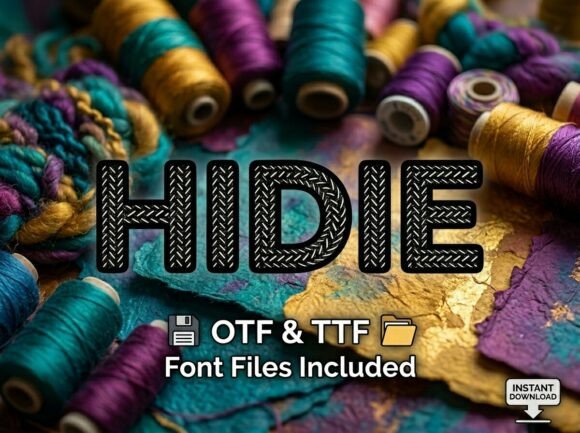
What sets this premium font apart isn't just its visual flair. It's the way it balances boldness with polish. Each uppercase letter carries its own personality, with unique artistic details that give your text a handcrafted feel without sacrificing professionalism. If you've been searching for a creative font that bridges the gap between expressive and refined, Hidie might be exactly what your project has been missing.
A Typeface Built for High-Impact Moments
Let's be honest—not every font works for every situation. A delicate script font might look beautiful on a wedding invitation, but it won't hold up as a headline on a billboard. Conversely, a clean sans serif font is great for body text but can feel flat when you need your title to pack a punch. That's where a strong display typeface like Hidie fills a critical gap.
Display fonts are designed specifically for large-scale use: headers, logos, posters, signage, and anywhere you need text to function as a visual element rather than just a vessel for information. Hidie takes this concept seriously. Its letterforms are crafted with distinct visual weight, interesting proportions, and decorative touches that make each character feel like a small piece of art.
This isn't a font you'd use for a 500-word blog post or a legal disclaimer. But for that hero section on your website? The title of your next editorial layout? The name of your product on a label? That's where Hidie shines.
Practical Applications Across Creative Projects
The versatility of a well-designed display font often surprises people. Here are some real-world scenarios where Hidie can make a meaningful difference:
- Brand Identity: If your brand personality leans toward bold, artistic, or unconventional, Hidie can anchor your visual identity. Use it for your logotype, brand name on packaging, or header text on your website to create instant recognition.
- Logo Design: A logo sets the tone for everything else. Hidie's strong visual personality makes it an excellent starting point for logos that need to communicate creativity, confidence, and originality.
- Packaging Design: Shelf appeal matters. Whether you're designing labels for a small-batch candle line or packaging for a new snack brand, a distinctive typeface helps your product stand out among competitors using generic fonts.
- Social Media Graphics: Instagram posts, Pinterest pins, YouTube thumbnails—these platforms are crowded. Using a creative font like Hidie for your headlines and key text can help your content get noticed in a fast-scrolling feed.
- Posters and Event Materials: Concert posters, festival flyers, gallery announcements, and event invitations all benefit from typography that feels energetic and memorable.
- Merchandise: T-shirts, tote bags, mugs, and stickers often rely on a single phrase or word to carry the design. A display font with character makes that text the star.
- Editorial Design: Magazine covers, book titles, and feature article headers need typefaces that draw readers in. Hidie works well as a headline font paired with a more neutral body typeface.
- Digital Products: If you sell templates, workbooks, or online courses, using a distinctive font for titles and section headers adds perceived value and professionalism to your deliverables.
Pairing Hidie with Other Typefaces
One of the most practical skills in design is knowing how to combine fonts. A display typeface like Hidie works best when it's paired with something more restrained for body text. Think of it as a lead vocalist and a backing band—each has a role, and they work together to create something cohesive.
For body copy, consider pairing Hidie with a clean sans serif font like a modern geometric sans or a humanist typeface. These combinations create contrast without conflict. The display font handles the attention-grabbing work, while the secondary font ensures longer passages remain easy to read.
Alternatively, if your brand leans more editorial or sophisticated, try pairing Hidie with a classic serif font. The mix of a decorative display face with a traditional serif can create an interesting tension that feels both modern and timeless.
The key is to avoid pairing two fonts that compete for attention. If both typefaces are loud and expressive, the design can feel chaotic. Let Hidie do the heavy lifting visually, and give it room to breathe by keeping surrounding text simple.
Readability and the All-Caps Design
Here's something important to understand before you commit: Hidie is an all-caps typeface. That means it includes uppercase letters only—there are no lowercase characters. This is a deliberate design choice, not a limitation.
All-caps display fonts are specifically engineered for short, impactful text. They work beautifully for headlines, logos, initials, and decorative titles where every letter needs to carry visual weight. The uppercase letterforms in Hidie were designed to work together as a cohesive set, with consistent proportions and stylistic details that create harmony across words and phrases.
That said, readability is always worth considering. For very long words or phrases, test how the font looks at the size you plan to use it. Display fonts are meant to be seen at larger scales, so what looks stunning at 72pt might feel dense at 14pt. Use Hidie where it belongs—in the spotlight—and choose a different typeface for paragraphs, captions, and smaller text elements.
What You Get: File Formats and Compatibility
When you invest in Hidie, you receive two standard font file formats that cover virtually every design scenario:
- OTF (OpenType Font): This is the professional standard used by advanced design applications like Adobe Illustrator, Photoshop, InDesign, and Affinity Designer. OTF files support enhanced typographic features and are preferred by designers working on print and digital projects.
- TTF (TrueType Font): This format offers universal compatibility across operating systems and applications. Whether you're working on a Mac, PC, or even using basic design tools, TTF ensures the font installs and functions correctly.
Having both formats means you're covered whether you're a professional designer working in industry-standard software or a small business owner creating materials in Canva, Google Docs, or other accessible platforms.
Making the Right Choice for Your Project
Choosing a font is more than an aesthetic decision—it's a strategic one. The typography you use communicates tone, personality, and positioning before anyone reads a single word. A playful handwritten font says something very different from a sharp geometric sans serif, and both say something different from a bold decorative display face like Hidie.
Before selecting any typeface, get clear on what your project needs to communicate. Are you trying to feel approachable and friendly? Edgy and modern? Luxurious and refined? Artistic and unconventional? Hidie fits squarely in that last category—it's for projects that want to feel creative, confident, and unapologetically bold.
If that aligns with your brand or your client's vision, then this font is worth serious consideration. If your project calls for something quieter or more corporate, you might be better served by a versatile sans serif or a classic serif typeface. There's no single font that works for everything, and recognizing that is part of good design thinking.
Final Thoughts on Adding Hidie to Your Toolkit
Building a thoughtful font library is one of the smartest investments any creative professional or business owner can make. The right typeface can transform a forgettable design into something that resonates, connects, and sticks in people's minds. Hidie brings a specific kind of energy—artistic, bold, and unmistakably intentional—that fills a real need in any designer's collection.
Whether you're refreshing your brand identity, launching a new product, or simply looking for a display font that doesn't feel generic, Hidie offers a distinctive voice worth exploring. Test it out, experiment with pairings, and see how it fits into your creative workflow. Sometimes the right font doesn't just complete a project—it elevates it.