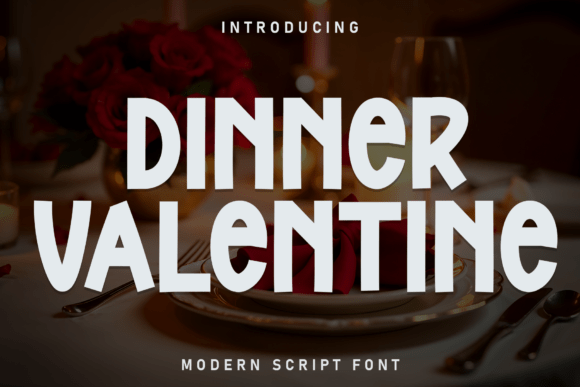
Dinner Valentine: A Font That Feels Like a Handwritten Love Note
There’s a certain magic in a handwritten note. It carries a warmth, a personality, and an intimacy that typed text often lacks. Imagine capturing that essence in a typeface you can use again and again. That’s the charm of a well-crafted handwritten display font. It doesn’t just spell out words; it delivers a feeling, a whisper of personality that draws the eye and stirs the heart. This kind of typography is a secret weapon for creating designs that feel personal, approachable, and genuinely joyful.
Beyond the Script: Understanding Its Unique Personality
This particular premium font is more than just another script style. It’s a carefully curated display font designed to radiate sweetness and warmth. Its tender, flowing etchings mimic the gentle pressure and casual elegance of a real hand, avoiding the overly rigid or cartoonish look that can plague other script fonts. The character set is designed to maximize its fun, lively character, with thoughtful alternates and ligatures that allow for natural, connected letterforms. This isn’t a font that shouts; it converses. Its amiable demeanor makes it perfect for projects where the goal is to create a connection, turning every crafted message into an intimate, joyful journey for the viewer.
The visual appeal lies in its balance. It has enough whimsy to feel playful and creative, yet its structure maintains a level of clarity that keeps it functional. The slight irregularities in the baseline and the varied stroke widths give it an authentic, hand-lettered quality. This is the kind of modern typography that feels both timeless and contemporary, a blend that works beautifully across a wide spectrum of creative applications.
Where This Handwritten Font Truly Shines
So, where does a font with this kind of personality fit into your design toolkit? Its applications are surprisingly versatile, bridging the gap between personal projects and professional branding.
For brand identity, it’s a standout choice for businesses that want to project a friendly, artisanal, or boutique feel. Think of a local bakery’s logo, a handmade jewelry brand, or a cozy coffee shop’s signage. It instantly communicates care and craftsmanship. In packaging design, it can transform a simple product label into something that feels special and gift-worthy, enhancing the unboxing experience.
Digital spaces are where it truly engages audiences. Use it for social media graphics to create quote images that feel personal, or for Instagram story headers that stand out in a fast-scrolling feed. On websites and blogs, it’s perfect for featured headlines, author bylines, or call-to-action buttons that need a touch of warmth, though pairing it with a clean sans serif font for body text is crucial for readability.
For print materials and editorial design, its charm is undeniable. It brings a heartfelt touch to wedding invitations, save-the-dates, and thank you cards. It can add personality to the masthead of a lifestyle magazine or the chapter headings in a cookbook. Even marketing assets like email headers or PDF guides benefit from its approachable style, helping to soften corporate communications and build rapport.
Practical Tips for Effective Implementation
Falling in love with a font is easy; using it effectively requires a bit of strategy. Here’s how to integrate a charming handwritten display font into your projects without losing professionalism or clarity.
First, match the typography to your project goals. This font is not the right choice for a legal contract or a technical manual. Its strength is in evoking emotion. Use it where you want to create a sense of joy, nostalgia, or personal connection. Its personality should align with your brand’s voice.
Font pairing is non-negotiable. A highly decorative script font used for large blocks of text becomes illegible and overwhelming. The key is contrast. Pair your charming script with a stable, highly readable serif font or a simple sans serif font. Let the script handle the headlines, logos, and short, impactful phrases, while its partner font handles the body copy. Always test your pairings by viewing them at different sizes and on various screens.
Readability considerations are paramount. Always check how the font renders at small sizes, especially for web use. Look at the clarity of its lowercase letters and how well it forms words. A beautiful font that’s hard to read defeats its purpose. Also, review the included font styles—does it come with regular, bold, or italic versions? Does it have the special characters and language support you need?
Finally, don’t overlook commercial licensing. If you’re using a font for client work, merchandise for sale, or a business logo, you need to ensure you have the correct commercial license. Reputable font foundries and marketplaces will clearly outline the terms. This protects both you and the font’s creator, and is a mark of professional practice in design.
Final Thoughts on Crafting with Character
In a digital landscape saturated with uniformity, a font that feels human is a powerful tool. It’s a design asset that does more than decorate; it communicates. Whether you’re a designer building a brand system, a small business owner creating your own marketing materials, or a crafter designing invitations for a loved one, choosing a typeface with the right emotional resonance can elevate your entire project. It’s about finding that perfect match between visual style and intended message, allowing your work to speak not just clearly, but also with genuine warmth and personality.