Casey: A Display Font That Commands Attention
There’s a moment in every creative project where you realize the typography isn’t just supporting the message—it is the message. You’ve tried the safe choices, the standard sans-serifs and predictable serifs, but something feels muted. Your headline needs presence, your logo needs character, and your brand needs a visual voice that doesn’t whisper. This is the exact space where a font like Casey steps in, not as a background player, but as the undeniable star of the show.
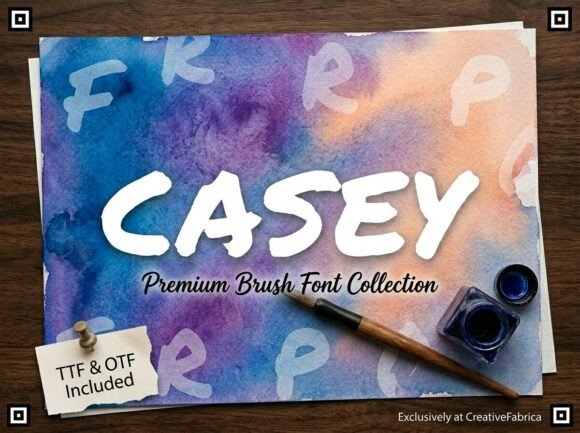
Casey is a decorative display typeface built for impact. Its letterforms are crafted with unique artistic flourishes and a strong, confident personality, designed to make every word feel intentional and striking. This isn’t a workhorse text font for body copy; it’s a specialist tool for moments that demand to be remembered. Think of it as the typographic equivalent of a bold, signature accessory—it defines the outfit.
Where Bold Typography Meets Real-World Projects
The true test of any creative asset is how it performs in the wild. A stunning font on a specimen sheet is one thing; a font that elevates a business card, a website header, or a product label is another entirely. Casey’s versatility lies in its ability to adapt its dramatic presence across different mediums while maintaining its core visual strength.
For branding and logo design, this typeface offers a fantastic starting point for a visual identity that needs to stand apart in a crowded market. A wordmark set in Casey can instantly convey creativity, confidence, and a distinct point of view. It’s particularly effective for brands in creative industries, boutique retail, artisanal products, or any service where personality is a key differentiator. Pair it with a simple, clean sans-serif for body text to create a beautiful and functional contrast that guides the viewer’s eye.
When it comes to packaging and merchandise, first impressions are everything. Casey can transform a product label into a piece of art. Imagine a coffee bag, a candle jar, or a box for gourmet treats where the brand name or product title is set in this expressive font. It communicates quality and care before the customer even reads the description. For merchandise like tote bags, t-shirts, or posters, a headline in Casey ensures the design is wearable and shareable, turning customers into advocates.
The digital landscape is equally hungry for standout typography. On social media graphics, where content is consumed in milliseconds, a bold, all-caps headline set in Casey can stop the scroll. It’s perfect for announcement posts, quote graphics, sale promotions, and profile banners that need to pop in a fast-moving feed. For websites and blogs, consider using it for main hero section headlines, article titles, or section headers to create clear visual hierarchy and inject energy into the layout. It pairs exceptionally well with more neutral body fonts like a classic serif or a geometric sans-serif.
Beyond the Obvious: Creative Applications for a Distinctive Typeface
While logos and headlines are natural fits, the applications for a font with this much personality extend further into the realm of editorial and print design. In editorial layouts—think magazine covers, feature article titles, or book chapter headings—Casey can add a layer of sophistication and intrigue. It sets a mood instantly, whether that’s modern, artistic, vintage-inspired, or edgy, depending on how you use it and what you pair it with.
For print materials like event posters, flyers, and business cards, the font’s all-caps, decorative nature ensures key information isn’t just read, but felt. A concert poster, a gallery opening announcement, or a boutique’s seasonal sale flyer gains a professional, polished finish that elevates the perceived value of the event or offer. Similarly, for invitations and stationery—weddings, milestone birthdays, corporate events—a headline in Casey sets an unforgettable tone from the very first glance.
Even in the world of digital products and marketing assets, this typeface finds its niche. It can brand a series of online course modules, make the cover of an e-book or a digital guide stand out in a crowded inbox, and give email newsletter headers the visual punch they need to improve open rates. The key is to use it strategically for high-impact, short-form text where its decorative details can be appreciated without hindering readability.
Practical Guidance for Using a Bold, All-Caps Font
Adopting a powerful display font like Casey requires a bit of thoughtful strategy to ensure it enhances rather than overwhelms your project. Here are some practical considerations drawn from common design challenges.
Readability is paramount. Because Casey is an all-caps display typeface, it’s engineered for impact at larger sizes. Use it for headlines, titles, logos, and initials—contexts where the text is meant to be absorbed at a glance. Avoid setting long sentences or paragraphs in it, as the uniform height of all-caps text can reduce reading speed and cause eye strain over extended lines. Its job is to attract, not to narrate.
Master the art of font pairing. This is where the magic happens. Casey’s strong personality needs a complementary partner to create balance. For most projects, you’ll want to pair it with a highly legible, neutral font for body copy. Excellent choices include:
- A clean sans-serif font like Helvetica, Futura, or Open Sans for a modern, crisp look.
- A classic, readable serif font like Garamond, Times New Roman, or Georgia for a more traditional, elegant contrast.
- A simple handwritten or script font can sometimes work for secondary text, but ensure it’s very legible and doesn’t compete for attention.
Consider your licensing and deliverables. When you acquire a premium font like Casey, you’re typically investing in professional design assets. The package usually includes both OTF (OpenType) and TTF (TrueType) files. The OTF file is the professional standard, offering advanced typographic features and superior rendering in design software like Adobe Illustrator, Photoshop, and InDesign. The TTF file ensures universal compatibility across all devices and operating systems, which is crucial if you’re creating documents that will be edited by others or used in less specialized software. Always review the license to understand the scope of your use, especially for commercial projects, merchandise, or client work.
Test before you commit. Before finalizing a logo or a major brand element, test the font in context. Set your business name or headline phrase in Casey and view it at the intended size, both on screen and in print if possible. Does it maintain its clarity and charm? Does it reflect the right tone for your brand? Does it pair well with your chosen body font? This simple step can save significant revisions later.
Ultimately, choosing a typeface like Casey is a decision to prioritize distinctiveness. It’s for the project that wants to own its space, the brand that isn’t afraid to have a strong point of view, and the creator who understands that typography is one of the most powerful tools in their visual arsenal. Used with intention, it doesn’t just display words—it defines them.