Flint: The Bold Display Typeface That Commands Attention
You know the feeling when you’re scrolling through a sea of content, and something stops you dead in your tracks? It’s not a flashy animation or a clickbait headline—it’s a design that just feels different. That magnetic pull often comes down to typography. A font like Flint doesn’t just sit quietly on the page; it strides into the room and makes an introduction. This isn’t another safe, neutral typeface. It’s a decorative display font engineered for impact, built for creators who refuse to blend into the background.
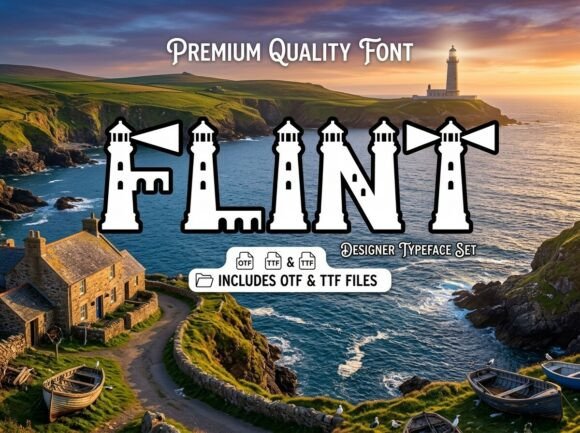
So, what exactly makes this typeface a game-changer for your projects? At its core, Flint is an all-caps display typeface. That means every single letter is crafted to be a standalone work of art. There are no lowercase letters here—this font is unapologetically bold, designed for moments where you need your words to be seen and remembered. Think of it as the headline act, not the supporting cast. Its unique artistic elements and strong visual personality give it a modern yet timeless quality, perfect for breaking away from the ordinary.
Where This Typeface Truly Shines
The real magic of a premium font like this lies in its versatility within high-impact roles. It’s not for writing a novel or setting body text, but for creating those critical first impressions and focal points. Let’s talk real-world applications where Flint can elevate your work from good to unforgettable.
Branding and Logo Design: Your logo is the cornerstone of your brand identity. A font with this much character can help a small business or startup stand out in a crowded market. Imagine it on a craft brewery label, a boutique coffee brand, or a modern tech startup’s logo. It conveys confidence and creativity, helping to build instant brand recognition. When used for a wordmark or monogram, it ensures your name is the star.
Packaging and Merchandise: On a shelf or in an online store, you have seconds to grab attention. Flint is perfect for product names, taglines, or call-outs on packaging design. Its strong visual personality can make a product feel more premium, artisanal, or daring. The same goes for merchandise—think bold typography on t-shirts, tote bags, or posters that people actually want to wear and display.
Editorial and Digital Layouts: For magazines, blogs, or website hero sections, this display font can set the tone instantly. Use it for chapter titles, pull quotes, or feature article headers in editorial design. In web design, a striking H1 or H2 in Flint can guide the user’s eye and communicate the page’s core message before they even read a paragraph of content.
Pairing for Professional Polish
Here’s a practical tip: a powerful display typeface like Flint needs a partner. Because it’s so expressive, it works best when paired with a more neutral, readable font for body text. Think of it as a conversation starter. Flint makes the bold statement, and a clean sans-serif or a classic serif font provides the supporting, easy-to-read information.
Try pairing it with a simple, geometric sans-serif for a modern, clean look. For a more traditional or elegant feel, a sturdy serif font can create a beautiful contrast. The key is to let Flint dominate the headlines and key call-outs, while its partner handles the longer text. This approach improves overall readability and creates a clear visual hierarchy, which is essential for professional presentation and guiding your audience’s engagement.
Practical Considerations for Your Project
Before you dive in, a few practical notes will help you make the most of this design asset. First, always test your font pairings in the context of your actual project. How does it look on a mobile screen versus a printed poster? Does the personality match your brand’s voice? A font that works for a edgy streetwear brand might not be the right fit for a luxury spa, even if both are “bold.”
Second, review the included file types. The purchase includes both OTF and TTF files. The OTF file is the professional standard for advanced design software like Adobe Illustrator or InDesign, offering the most features. The TTF file ensures universal compatibility, which is crucial if you’re handing off files to clients or using the font across different devices and platforms. This gives you flexibility whether you’re working on a complex branding package or a quick social media graphic in a simpler program.
Finally, a crucial point for any commercial project: understand your licensing. The font comes with a license, but if you’re using it for a client’s brand, merchandise you plan to sell, or a digital product, ensure the license covers that specific use. Investing in a properly licensed commercial font protects you and your business down the line and is a mark of a true professional.
Making It Your Own
The best part about finding a creative font with such a distinct personality is the opportunity to make it your own. Experiment with its spacing, size, and color. How does it look in a vibrant gradient versus a stark monochrome? Could you use individual letters as decorative initials or icons? The all-caps nature of Flint means every letter is designed to be a visual anchor.
Ultimately, typography is a silent ambassador for your brand. Choosing a typeface like Flint is a decision to communicate with confidence, artistry, and intention. It’s for the designer who wants their headline to resonate, the entrepreneur who needs their logo to tell a story, and the content creator who believes their message deserves a frame as compelling as the words themselves. It’s more than just a font; it’s a tool for creating moments that stick.