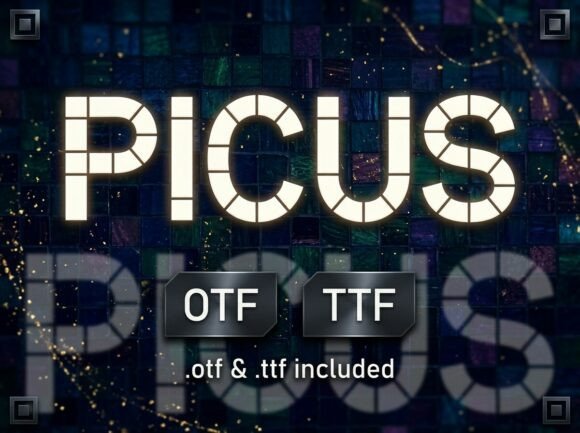
Picus: The Bold Display Typeface for Fearless Branding
There’s a moment in every design project where you need to stop playing it safe. You need a typeface that doesn’t just sit quietly in the background but walks into the room and owns it. Picus is that font. It’s a decorative display typeface built for one purpose: to be the undeniable focal point of your work. If you’re tired of blending in with the same minimalist sans-serifs and predictable scripts, Picus offers a visual personality that’s both artistic and unapologetically bold.
Understanding the All-Caps Advantage
Before you dive in, it’s crucial to understand what Picus is—and what it isn’t. This is an all-caps display font, meaning every letter is designed as a capital letter. There are no lowercase options. This isn’t a limitation; it’s a deliberate design choice. All-caps typefaces command attention. They’re built for headlines, logos, and decorative initials where every single letterform is treated as a piece of art. Think of movie posters, brand logos on packaging, or the title of a magazine cover. The uniform height and strong structure of all-caps text create an immediate sense of authority and visual impact that mixed-case fonts often can’t match.
This makes Picus ideal for high-stakes visual communication. When you’re designing a logo for a new coffee roaster, the word “BREW” in Picus won’t just be read; it will be felt. When you’re creating a social media graphic for a product launch, the headline won’t scroll by unnoticed—it will stop thumbs. The font’s unique artistic elements ensure that even short words become memorable visual statements.
Where Picus Truly Shines: Practical Applications
The versatility of a font like Picus lies in its ability to adapt to different creative contexts while maintaining its core character. Here’s how you can put it to work across various projects:
- Logo Design & Brand Identity: A logo is the cornerstone of brand recognition. Picus can give your mark a distinctive, high-end feel that sets you apart from competitors using generic fonts. Its strong visual personality helps build instant recognition.
- Packaging Design: On a shelf crowded with products, packaging needs to grab attention in seconds. The bold, decorative nature of Picus can make product names and key descriptors leap off the box or bag, enhancing shelf appeal.
- Editorial & Print Layouts: Use it for chapter titles in books, section headers in magazines, or pull quotes in reports. It adds a layer of artistic flair to otherwise structured layouts, guiding the reader’s eye effectively.
- Marketing Assets & Social Media: From Instagram story headlines to Facebook ad graphics and email newsletter subject lines in images, Picus helps your key messages cut through the noise. It’s perfect for creating cohesive, eye-catching campaign visuals.
- Web Design & Blogs: While not for body text, Picus is excellent for hero section headings, navigation labels, or call-to-action buttons on a website. It establishes a strong visual tone right from the first click.
- Merchandise & Invitations: Think t-shirt graphics, tote bags, event posters, or wedding invitations. The font’s decorative quality adds a premium, custom feel to physical items.
By using a consistent, distinctive typeface like Picus across these touchpoints, you create a seamless visual language. This consistency is fundamental to building a professional and trustworthy brand identity that audiences remember.
Making It Work: Pairing and Practicality
A powerful display font like Picus needs a supporting cast. The key to successful typography is pairing. Because Picus is so stylistic and attention-grabbing, it pairs best with cleaner, more neutral fonts for body text. Consider matching it with a simple sans-serif like Helvetica, Open Sans, or a classic serif like Garamond for longer paragraphs. This contrast ensures readability while letting the headlines do their job.
Always test your pairings in context. Mock up your design in the actual application—whether it’s a website header, a product label, or a social media post—to see how the fonts interact at their intended sizes. Pay close attention to spacing and scale. Picus is designed for impact, so it often works best at larger sizes where its intricate details can be appreciated.
What You’re Getting: The Files and Licensing
When you choose Picus, you receive the two most essential font files for professional work:
- OTF (OpenType Font): The professional standard for advanced design software like Adobe Illustrator, InDesign, and Photoshop. It offers the best typographic features and layout control.
- TTF (TrueType Font): The universal standard for compatibility across almost all devices and operating systems, ensuring your fonts display correctly for clients or collaborators who may not have professional design software.
It’s also vital to consider the licensing. For creators using Picus in commercial projects—like client logos, products for sale, or paid marketing materials—ensuring you have the correct commercial license is non-negotiable. This protects your work and your business. Always review the specific license terms that accompany your font purchase to understand the scope of use permitted.
Final Thoughts on Choosing a Creative Font
Selecting a typeface is a strategic decision. It’s not just about what looks cool; it’s about what communicates your message effectively and aligns with your project’s goals. Picus is for the moments when you need to make a statement. It’s for the entrepreneur launching a bold new brand, the designer creating a standout poster, or the content creator who wants their graphics to have an unmistakable edge.
If your goal is to break away from the ordinary and give your work a strong, artistic voice, exploring a premium display font like Picus is a worthwhile step. It’s a tool that, when used thoughtfully, can significantly elevate the professional presentation and visual impact of your creative projects.