Willie: The All-Caps Display Typeface for Bold Branding
Every designer hits a point where the standard library of fonts feels, well, standard. You open up your project file, ready to create a logo that jumps off the page or a headline that commands attention, and you find yourself scrolling through endless variations of sans serifs and serifs that just don't have the spark you need. If you are working on a project that demands personality—something that feels handcrafted yet polished—you might be looking for a typeface like Willie. This isn't just another set of letters; it is a decorative display font built specifically to be the visual anchor of your design.
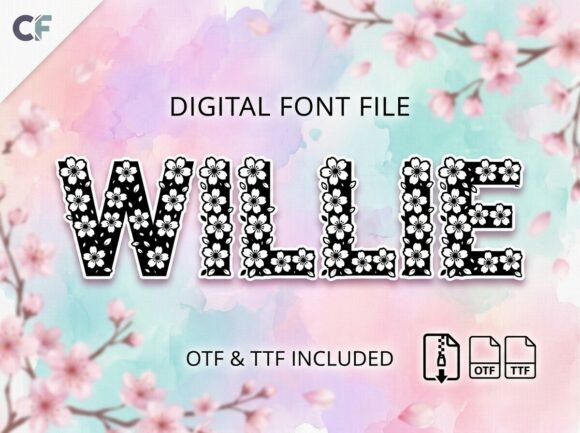
Willie is designed with a strong visual personality. It features unique artistic elements that set it apart from the rigid geometry of modern typography. Because it is an all-caps typeface, it forces a sense of uniformity and strength in every word you type. However, unlike blocky industrial fonts, Willie balances that strength with decorative flair. It is the kind of typeface that looks like it was hand-lettered by a master sign painter but digitized for the modern era. For creators who want to break away from the ordinary, this font offers a way to make text feel like a piece of art rather than just information.
Practical Applications for Modern Creators
Understanding where a display font like Willie fits into your workflow is key to getting the most value out of it. Because it is a premium font designed for high-impact visuals, it isn't meant for long paragraphs of body copy. Instead, it shines brightest when used strategically. If you are a small business owner or a creative entrepreneur, you are likely constantly looking for ways to make your brand stand out in a crowded market. Willie is versatile enough to handle a variety of specific tasks across different media.
Consider the world of packaging design. If you are selling artisanal goods, coffee, or cosmetics, the label needs to tell a story before the customer even picks up the product. A font like Willie can give your packaging a boutique feel, suggesting that care and attention went into the product inside. It works exceptionally well for brand names or product titles on the front of a box or bottle.
Beyond physical products, the digital space is another prime territory. Social media graphics need to stop the scroll. Whether you are creating Instagram stories, Pinterest pins, or YouTube thumbnails, a bold, artistic typeface grabs the eye. Willie works perfectly for short, punchy phrases that need to be read instantly. Similarly, in web design, you can use it for hero headers—the main text at the top of a homepage—to establish an immediate mood.
Pairing Fonts and Maintaining Readability
One of the most common challenges with using a creative font is figuring out what to pair it with. Since Willie is an all-caps display typeface with decorative elements, it has a very specific voice. It is loud, so it needs a partner that knows how to whisper. If you pair Willie with another loud, decorative font, your design will look chaotic and be difficult to read.
The best approach is to contrast it with something simple and clean. A neutral sans serif font for your body text is usually the winning combination. Fonts like Open Sans, Lato, or Montserrat are excellent choices. They provide a clean, professional finish that grounds the artistic energy of Willie. When you use Willie for the headline and a simple sans serif for the description, you create a hierarchy that guides the viewer's eye exactly where you want it to go.
Readability is a crucial consideration here. Because Willie is an all-caps font, you need to pay close attention to letter spacing (tracking) and line height (leading). All-caps text generally requires more space between letters to remain legible than mixed-case text. If the letters are too tight, the artistic details might merge together, making the word hard to decipher. A good rule of thumb is to increase your tracking slightly—perhaps by 50 to 100 units in your design software—to let the unique shapes of the letters breathe.
File Formats and Technical Compatibility
When you invest in a commercial font, you need to know that it will work seamlessly with your tools. Nothing is more frustrating than buying a beautiful typeface only to find it won't load in your favorite software. Willie comes provided in two industry-standard formats: OTF and TTF.
The OTF (OpenType Font) file is the professional standard. If you are using advanced layout software like Adobe Illustrator, InDesign, or Photoshop, this is the file you want to use. It offers the best quality and often includes advanced typographic features. The TTF (TrueType Font) file is included for universal compatibility. This ensures that the font works perfectly on almost all devices and operating systems, including older versions of Windows or basic design apps.
It is important to remember the nature of this typeface. Willie is a display typeface, meaning it is designed specifically for large sizes. It is not intended for small text. If you try to use this font at 8pt or 10pt size for a legal disclaimer or a long blog post, the intricate details will likely become muddy or disappear entirely. Always keep this font for headlines, logos, and decorative initials where it can be shown at a size that highlights its craftsmanship.
Building a Visual Identity with Typography
Typography is the voice of your brand. Just as you choose specific words to communicate your values, the typeface you choose communicates your style. A brand using a handwritten font feels personal and approachable. A brand using a geometric sans serif feels modern and tech-savvy. Choosing a font like Willie signals that your brand values creativity, artistry, and boldness.
For editorial design or magazine layouts, Willie can add a layer of sophistication to pull quotes or section headers. It turns a standard page of text into something that feels curated and designed. For merchandise, such as T-shirts or tote bags, a strong display font is essential. Willie has the visual weight to stand alone as a design element on apparel without needing complex illustrations to support it.
If you are creating invitations for events, weddings, or parties, the font sets the tone immediately. A decorative serif or artistic display font suggests an upscale event, whereas a blocky sans serif might suggest a tech conference. Willie bridges the gap between artistic and professional, making it suitable for creative business launches or gallery openings.
Making the Most of Your Design Assets
Before finalizing any project, it is always wise to test your font pairings in context. Don't just look at the letters "Aa" in your font viewer. Type out the actual headline you plan to use. Check the spacing between specific letter combinations. For example, how does the "W" interact with the "A"? How does the "T" sit next to the "O"? Display fonts often have unique kerning requirements, and while the files provided are usually well-kerned, manual adjustments can often elevate a design from good to great.
Ultimately, Willie is a tool for expression. It is a premium font designed for those moments when you need to be seen. Whether you are designing a logo for a new startup, creating marketing assets for a product launch, or simply looking for a way to make your digital products look more polished, having a strong all-caps display typeface in your library is a strategic advantage. It allows you to inject personality into your work instantly, ensuring that your message isn't just read, but felt.